Showing posts with label gorgon. Show all posts

Friday, April 25, 2025

Some thoughts on medusas, maedars, and padrafytes

So I recently had some thoughts on etymology and wordplay as it related to D&D's medusas.

The word Gorgon ultimately originates from Greek gorgós, meaning "terrible, fierce, grim". In both Latin and Ancient Greek the word is of the feminine gender. There is no masculine counterpart that I could find, although the male given name Gorgias shares the same root. The word Gorgon may or may not be related to the word gargoyle, but if not then both still developed similar meanings independently: terrifying effigies used to protect sacred places.

Medusa's name seems to derive from Greek medeôn, meaning "guardian, queen". There is no masculine counterpart that I could find, although various modern writers have coined the name "Meduso" using Spanish gender declension. The third party OSR supplement Wyrms & Warlocks: Medusa's Hunger published by Goblinoid Games coins the name "medusan" to refer to a male medusa, a simple compound of medusa plus the suffix -an.

The name "maedar" seems to be a wholly invented word with no discernible etymology. I suspect it probably derived from playing around with the syllables in "medusa" plus the suffix -er, patterned after widower

In the third party d20 product Book of Templates, a half-medusa template is introduced, reprinting an earlier template written by Sean K. Reynolds. In the book, a half-human/half-medusa specifically is known under the name "padrafyte" and presented as a playable race instead of a template. I can only speculate on the etymology, but it seems to derive from padre ("father, priest") plus -phyte ("growth"). In other words, it means "growth like the father", referring to their resemblance to their non-medusa parent.

Saturday, January 11, 2025

Some thoughts on D&D's medusae as a self-reproducing race

In my last post I shared my thoughts on the "medusas as curse" concept from D&D 5e. In this post I want to touch on the other depictions in D&D of medusas as a self-reproducing race. (For reference going forward, I'm using "gorgon" as a gender-neutral term for medusas and co.)

In Greek myth, there's no apparent depiction of gorgons as a self-reproducing race. There was a trio of sisters, the Gorgons, born to Phorcys and Ceto. One of the sisters, Medusa, gave birth to Pegasus and Chrysaor after being impregnated by Poseidon. At most, one fragmentary account says Medusa's father was a gorgon. (For reference, "gorgon" in Greek translated to "terrible one, fierce one.")

In D&D, Gygax and co took various unique monsters from mythology and gave them ecologies where each was made into an entire species. These ecologies were often weird, nonsensical, or even misogynistic. In the case of the medusa, their reproduction actually changed across the editions due to differing writers and sometimes it was just plain weird. 

Initially the medusas received no information on their reproduction, then later publications started providing more information, then contradicted themselves later on. Some said most medusas were female (implying there were a few males for reproduction), others said medusas were always female (raising the question of how they reproduced). 

One 1986 article introduced a new monster called the "maedar" as the male counterpart of the medusa, whose appearance and powers were basically the inverse of his female counterpart: he was bald and turned stone to flesh with his touch. These gorgons reproduced more or less normally for sexually dimorphic humanoids. In a subsequent 1993 book this simple reproduction was needlessly complicated by the writer claiming that only 1% of offspring were maedar, while the other 99% were human infants that petrified upon seeing their mother. In order to birth more medusas, the medusa had to rely on human men. What kind of sense does that make? 

In a 3rd edition Dragon magazine article, issue #355, they were given a much more sensible method of reproduction. Gorgons reproduced normally among their own kind, although maedar were born rarely compared to medusas. Otherwise, medusas could abduct human men for reproduction: such pairings produced infant medusas, as well as human boys who petrified upon seeing their mother.

In 4th edition, the maedar were simply called male medusas and their abilities changed to a weaker form of the female's: he was still bald, but now his gaze was literally venomous.

There's no maedar in 5th edition due to their nature changing to a curse, but unofficial conversions combine the pre-4e maedar with the 4e male medusa so that he is bald, has venomous gaze, and turns stone to flesh.

So what do I think of all this? Well, I don't think D&D monsters need to have ecologies in the first place. It demystifies them and turns them into alien fauna. How is something a monster when it has a place in the natural ecology? Not only that but, as I said before, a lot of these pseudo-naturalistic ecologies are just silly. 

Gorgons don't need to have societies or reproductive cycles to explain where they come from. I'm satisfied with them spontaneously generating as needed by the GM. If you need a more detailed explanation for that, then posit the existence of magic fields that radiate across the world according to the movements of planets. These magic fields occasionally crisscross at symbolic times and locations, where they form magical vents that spawn magical creatures. The medusa is spawned when the magic fields of the Moon are ascendant, as the Moon is the planet sacred to cycles, reptiles, and delirium.

In you want something inspired by mythology, then I have another idea. In Greek myth there is a monster called the Dracaena ("she-dragon, dragoness"), who appears as a beautiful nymph from the waist up and a dragon from the waist down. Famous Dracaena included Echidna and Ceto, who gave birth to various monsters. I'm just gonna call her a "nymph-dragoness" to reflect her appearance. The fantasy world is therefore home to one or more of these nymph-dragonesses. They are legendary monstresses who live to spawn various monsters including gorgons. Where did she come from? The earth gave birth to her. Where did the earth come from? It arose spontaneously from the primordial chaos. Where did that come from? It always existed.

Friday, January 10, 2025

Some thoughts on DnD’s “curse of the medusa”

I recently read a deep dive on the history of D&D's medusas and had some thoughts of my own.

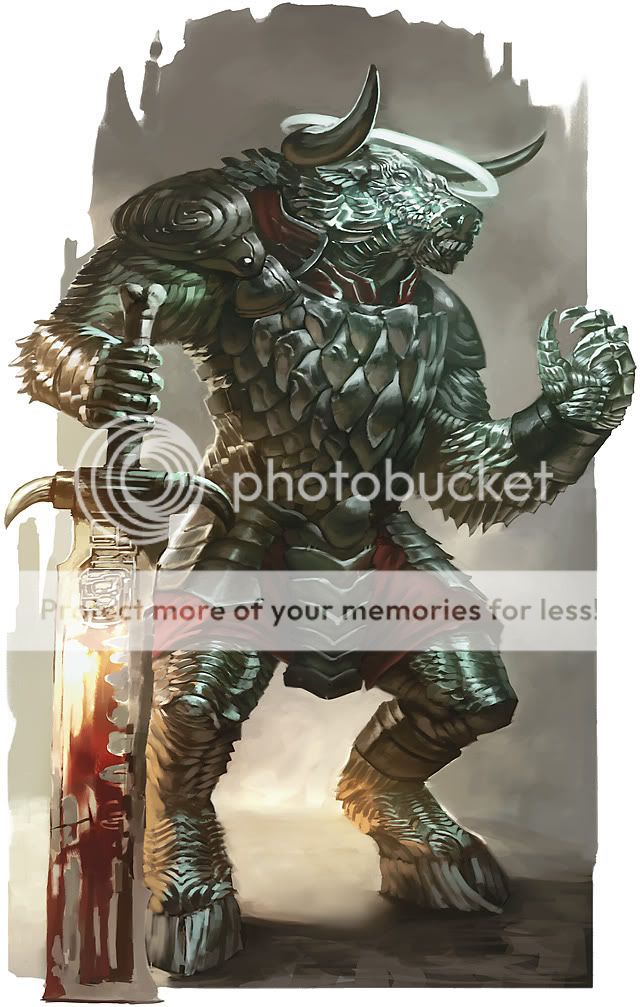
I prefer to call them gorgons after the original Greek myths, and will continue that usage for the rest of the this post. (The iron bull monster can just be renamed to "stone-breath bulls" or something.) I prefer to treat gorgons as a curse, as per the popular myth, as I find that origin more mystical and customizable than them being just yet another self-sustaining fantasy race. However, the 5th edition story for the curse has problems.

According to the 5e MM, the clients are vain brats who get eternal beauty from the patron, before it eventually turns them into gorgons. Do they know this is the price and, if so, why would they ever agree? What does the patron get out of the deal? It feels poorly thought out to me, so I think it needs revising.

Unless you can find a good reason for it, then ditch the whole patronage thing. Unless the patron is deliberately trying to torment people or spread death, then they have no reason to curse people into gorgons. Instead, make gorgonism a cosmic karmic punishment for women who seek eternal beauty to the exclusion of all else, particularly the health and safety of others. Such a vain women was wicked, used her beauty for evil ends, and resorted to dark means to preserve her beauty, like using dark magic to steal the life of others. So the universe curses her, turning her into a gorgoness.

The curse of the gorgoness, beyond being a hideous monster, is that now nobody can appreciate her beauty. Anyone who looks at her turns to stone. If the gorgoness ever looks at her own reflection, then she too turns to stone. As a result, they become very antisocial individuals.

A gorgoness's appearance is variable but reflects how long she has been cursed. Fledgling gorgonesses still appear largely the same aside from her hair turning into snakes and her skin taking on an earthier tone, perhaps to emphasize the irony. As the curse progresses, she grows brass claws and talons, venomous fangs and tusks, features like a hag, her skin turns to scales, and her legs are replaced by a massive serpentine tail. Some even grow wings like in the myths.

What of male gorgons? Well, here things become more complicated, but not really. See, the gorgoness's vanity was not simply the result of her own wickedness, but also contributed to by patriarchal society's obsession with feminine beauty. Women are socialized to value their beauty, and punished for failing to do so, far more than men are. As such, men who are vain enough to deserve cursing for it are rarer and manifest differently: he becomes a gorghias.

A gorghias doesn't gain the same monstrous combat benefits as a gorgoness does. All his hair falls out, his skin becomes earthy and scaly, and he gains a literally venomous gaze. Those who gaze upon his visage are literally poisoned by him, and seeing his own reflection sends him into anaphylactic shock. See the social commentary?

Do gorgons organize? Do they reproduce? No. The curse is meant to isolate them, turn them into a blight on society even worse then they were as mortals. They are immortal and do not reproduce. They don't even eat or drink anymore, instead draining lifeforce with their deadly gazes for sustenance. 

But these are just some ideas. Perhaps your gorgons are the spawn of a legendary dragon-nymph like Ceto or Echidna, the creation of a mad wizard like Morgoth or Doctor Frankenstein, or a demon lord's malicious curse on some poor fool. Greek myth wasn't consistent on where the gorgons came from, with one story saying they were spawned by Ceto while another claimed Medusa was cursed by Athena. You do you!

Saturday, January 21, 2023

Taking on the catoblepas/gorgon again

I’m treating the catoblepas and MM gorgon as variations on the same thing, so don’t get confused later. The catoblepas has received a few variations in 3pp because the monster is public domain but was never included in the SRD. I’m gonna simplify all that into a series of random generation tables.

Melee attack, roll 1d4
1. Gore attack, roll to determine damage
2. Tail strike, roll to determine damage
3. Mane of snakes, deal special attack damage
4. Long neck doubles melee reach, roll 1d3 to determine attack from the above list

Gore attack damage, roll 1d3
1. Curling horns, bludgeoning damage
2. Pointed, antlers and/or tusks, piercing damage
3. Mix, bludgeoning & piercing damage

Tail damage, roll 1d4
1. Mace tail, bludgeoning damage
2. Spiked tail, piercing damage
3. Spiked mace tail, bludgeoning & piercing damage
4. Long tail doubles melee reach, roll 1d3 to determine attack from the above list

Defenses, roll 1d4
1. Thick hairy hide and/or bony plates, no additional effect
2. Metallic scales, adds vulnerability to electricity/lightning damage
3. Horrible stench, opponents must hold breath to avoid taking psychic/poison damage
4. Defensive spines, deal piercing damage if an opponent successfully hits in melee

Special attack, roll 1d3
1. Gaze attack*
2. Breath weapon
3. Eye ray attack*
(Roll on following table to determine damage)
*Cannot be used if the catoblepas’ eyes are covered or damaged. This include the eyes provided by the mane of serpents.

Special attack damage, roll 1d6
1. Poison damage, and resistant to poison damage; has violet pigmentation
2. Necrotic damage, and immune to necrotic damage but vulnerable to radiant damage; has black pigmentation
3. Acid damage, and resistant to acid damage; has green pigmentation
4. Petrifaction, and immune to petrifaction; has gray/silvery pigmentation
5. Fire damage, and immune to fire damage but vulnerable to cold damage; has red/orange/yellow pigmentation
6. Cold damage, and immune to cold damage but vulnerable to fire damage; has blue/white pigmentation

Throw spikes attack, roll 1d4
(If the catoblepas has spikes/spines from its tail or defense then roll this table, otherwise ignore)
1. No additional effect
2. Can throw spikes as a ranged attack, like manticore
3. Spines deal special attack damage
4. Spines can be thrown & deal special attack damage

Spit venom attack, role 1d2
(If the catoblepas has a mane of serpents then roll this table, otherwise ignore)
1. No additional effect
2. The snakes can spit venom as a ranged attack, dealing special attack damage

If desired, roll multiple times on single tables, ignoring nonsensical results.

Thursday, November 4, 2021

The D&D "gorgon" is probably not based on the Greek bronze bull

I've seen a few articles, blogs, and vlogs claiming that the the D&D "gorgon" is based on the mythological "khalkotaur." This is complete bunk, in several ways. I've said this before, but I think it bears repeating.

Firstly, the D&D "gorgon" is clearly based on the catoblepas by way of Edward Topsell, who infamously confused the catoblepas with the gorgon Medusa in his 1607 bestiary The Historie of Foure-Footed Beastes and propagated further in works like Curious Creatures in Zoology.

Secondly, there's no such mythological monster as a "khalkotaur." That name is fakelore propagated by Wikipedia. There are the Tauroi Khalkeoi, or Bronze Bulls in English. (Not to be confused with the similarly named torture device, which itself may be mythical too.)

Thirdly, we have no evidence whatsoever that the D&D gorgon was inspired by the bronze bulls. They look and attack completely different: the former has iron scales and breathes petrifying fumes, the latter is made of bronze and breathes fire. Any similarities (i.e. both are metal bulls with breath weapons) appear to be pure coincidence.

Fun fact: Hacklopedia of Beasts includes an entry for the D&D gorgon, which not only gives it bat-like wings in contrast to typical depictions, but mentions that the monster is also known as "burakog" and "khalkotaur." And all this time I've just been calling it an iron bull.

Saturday, July 13, 2019

Reverse gorgon medusa

A rather hilarious art meme I found online is the “reverse gorgon” or “reverse medusa.” The gorgon Medusa was a woman with snakes for hair. The reverse is a snake with humans for hair or scales. Take a look:

Source by @sugardrini on Instagram

Source by Robin Harper Latkovich

Source by Hannah McGill

  • According to Robin Harker Latkovich: "Reclusive by necessity, this beast is the opposite of its feared cousin in every way.  Tragically, upon gazing at anyone, the Reverse Medusa promptly turns to stone." 
  • According to u/DarkBlueAnt, its gaze turns stone to flesh. 
  • According to EatSleepDraw: "The Reverse Medusa is a snake that grows humans out of its head, and turns statues into people."

Friday, July 5, 2019

Variations on the metal bull aka bovine basilisk

The metal bull "gorgon" is pretty boring as far as monsters go, so despite being a mainstay of D&D it has received almost no attention in monster manual additions. I previously wrote a post discussing ideas for the ecology of metal bulls, so this will be an expansion and revision to that.

Wednesday, June 26, 2019

History of gorgons IV: medusa in gaming

In past posts I went over the myth of the gorgon sisters, the catoblepas and how they were conflated within D&D. In this post I will focus on the evolution and usage of the medusa within fantasy gaming. D&D has a long history of taking singular monsters from world mythology and turning them into an entire race of monsters, typically mangling the background and properties of the original monster in the process.

Thursday, June 13, 2019

What is a gorgotaur?

While skimming books and searching the web I came across the invented word gorgotaur. Etymologically, it is a combination of the Ancient Greek gorgos ("terrible, fierce") and tauros ("bull"); thus, it literally translates as "terrible bull."

It could also be considered a combination with centaur instead, due to mistakenly assuming that taur means "a centaur-like creature" rather than a bull. Interestingly enough, some ancient art of Medusa depicts her as a centauress.

D&D made the weird choice of depicting a toxic iron bull as a "gorgon," despite more closely resembling the mythical catoblepas, so to avoid confusion I will use the unambiguous terms medusa and iron bull instead.

I have seen the word gorgotaur used rarely in a couple examples. In the roleplaying game Mazes & Minotaurs, the gorgotaur is a heavily mutated or primordial minotaur; among other features, it has hooves instead of hands (examples @ grieksegids.nl and clipart.com). In the supplements Encyclopaedia Arcane: Crossbreeding and Monster Geographica Underground, a gorgotaur is a hybrid of minotaur and iron bull. Speaking of hybrids, Book of Templates Deluxe Edition 3.5 introduced a half-iron bull or "demigorgon" template.

The name may be analyzed in other ways besides the three mentioned above. Perhaps a combination of an iron bull and a centaur or bucentaur? Maybe a combination of minotaur, iron bull and (bu)centaur? Maybe a combination of a medusa (i.e. Greek gorgon) and a minotaur?

So that gives us about six varieties to start with: a centauress with snakes for hair who gazes turns onlookers to stone, a grotesque and bestial minotaur, a minotaur with iron hide and toxic breath, a centaur whose lower body is a bull with iron hide and exhales toxic fumes, the preceding with the head of a bull, and a minotaur with a mane of snakes whose gaze turns onlookers to stone.


Monday, September 24, 2018

History of gorgons: the myth of medusa

The gorgons of Greek myth underwent changes over time. Gorgons were initially depicted as terrifying monsters with wings, claws, tusks and serpents for hair (including beards); at one point Medusa was depicted as a centaur. Their name literally translates to "terrifying." Oddly enough, their image was used in protective amulets and they were considered protectors of oracles. The logic appears to go that the best defense against evil is something equally terrifying.

Thursday, June 14, 2018

History of gorgons, part 2: the catoblepas

As I explained in my previous post in this series, the “gorgon” in the monster manuals is actually a unique syncretism of various mythological monsters including the catoblepas, gorgon (medusa) and bronze bulls. In this entry, I will be examining the history of the catoblepas proper in the context of medieval bestiaries and fantasy gaming.

Monday, January 8, 2018

History of Gorgons, part 1: Topsell's "gorgon"

This shall be the first in a series of articles examining the gorgon and related monsters. In this part, I trace the origin of the gorgon. The gorgon as depicted in the monster manuals owes its origin to Greek mythology, medieval bestiaries, and scribal errors. The specific sources, I believe, are the gorgon Aex, the catoblepas, the bronze bull, and Edward Topsell.

Tuesday, September 19, 2017

Ecology of the Catoblepas and Metallic Bulls

Because of a mistake by Edward Topsell in his 1607 zoological text, The Historie of Foure Footed Beasts, the monster manuals labeled the Catoblepas a "gorgon" and conflated it with the Bronze Bull of Greek mythology. Later monster manuals would introduce a "catoblepas" as a separate creature with little in common with the catoblepas of medieval bestiaries. For those of you who remember gorgons as snake-haired women, here are some alternative ways of representing the catoblepas, metallic bulls and similar creatures. UPDATED 10/26/2017